How pick-your-own-parts yards work
Walk in, find a car like yours, take the part off yourself and pay on the way out. Here is what happens at each step, and what to ask so nothing surprises you.
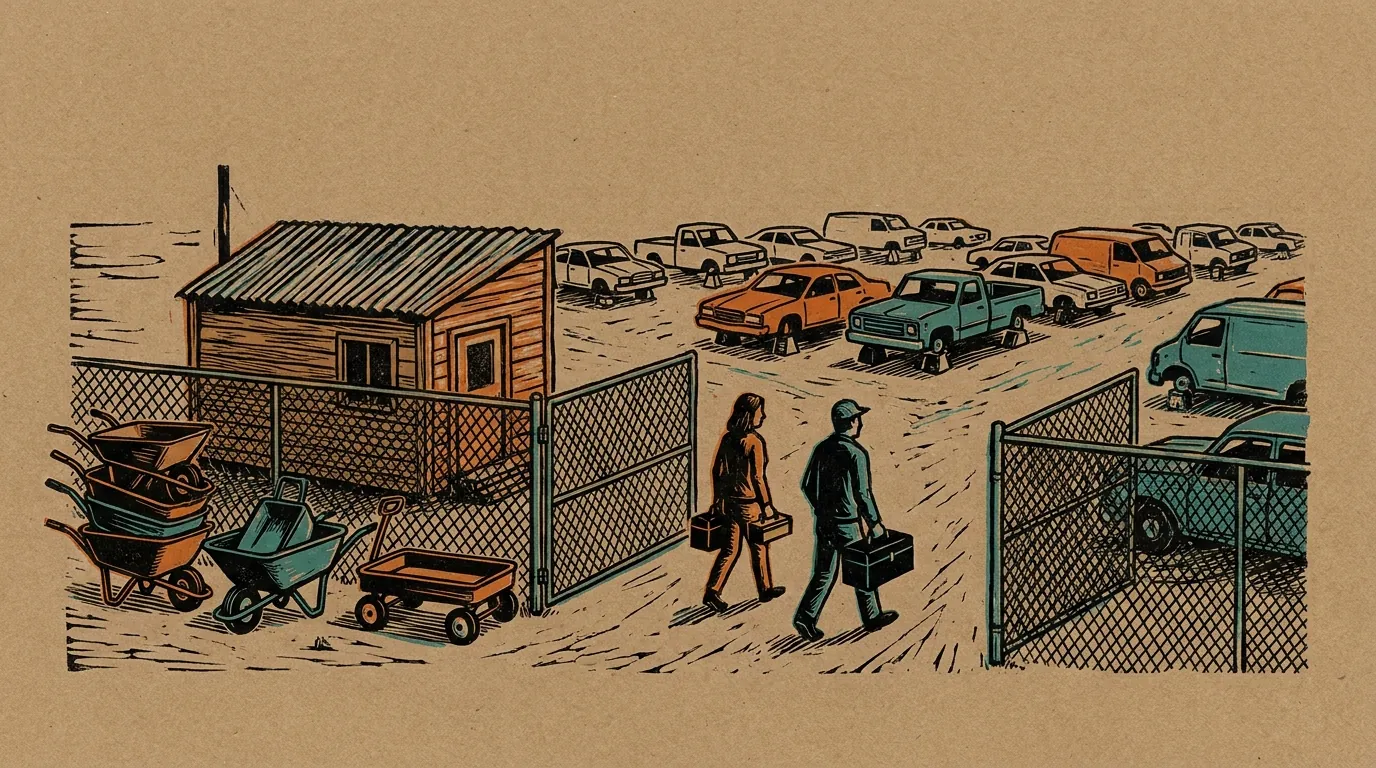
A pick-your-own-parts yard is a junkyard where you do the work. The yard sets cars out in rows, you bring tools, and you remove the part you need. You pay less because nobody is paid to pull it for you. People also call these yards self-service, u-pull or pick-and-pull yards. The idea is the same at all of them.
The directory lists 734 pull-your-own yards in 48 states. A yard is marked pull your own only when a customer review or the yard's own website says customers pull their own parts there.
At the gate
Most pull-your-own yards have one way in, through the office or a gate next to it. Expect a few things here:
- An entry fee. Many yards charge a small admission fee per person. Some don't. The amount is posted at the gate or on the yard's website.
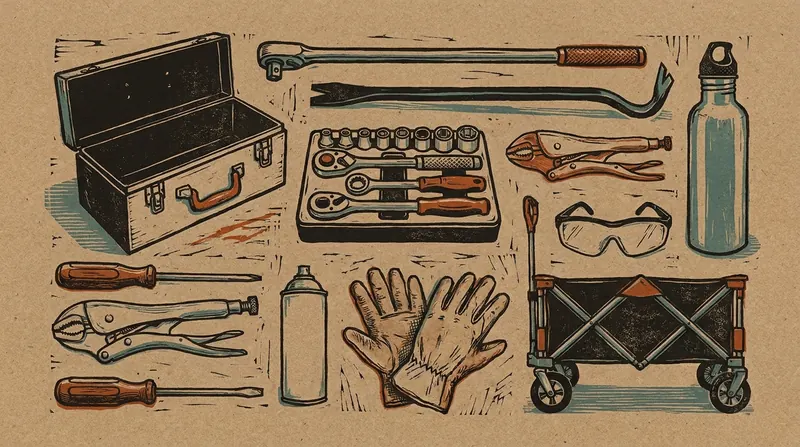
- A tool check. Staff may look in your toolbox. This is to stop people bringing banned tools, and at some yards to stop people walking out with parts they didn't pay for.
- The rules. Common ones: no torches or open flames, no jacks or jack stands, closed-toe shoes only, and an age limit for kids. Rules differ from yard to yard, so read the sign or ask.
- A waiver. Some yards ask you to sign a release before you go in.
The gate is also where you borrow or rent a wheelbarrow or wagon if the yard has them. If you plan to pull something heavy, ask now. It is a long walk back from the far rows.
The rows
Cars are usually grouped by make, or by domestic, Asian and European models. Rows are marked with numbers or signs. Many yards print a map or keep a list at the office of what is in each row.
The cars sit on wheel stands or rims, a foot or two off the ground, so you can reach the underside without a jack. That is why most yards ban jacks: a car on stands plus a jack is how people get hurt. Never crawl under a car in the rows. Work from the side, and if a car looks unsteady, leave it and tell the staff.
Yards bring in new cars all the time and crush old ones to make room. A car that was there last week may be gone. Some pull-your-own yards post their inventory online, and 452 listed yards in the directory have a review or website that mentions it. An online list shows which cars are in the yard, not which parts are still on them, so the part you want may already be gone.
Pulling the part
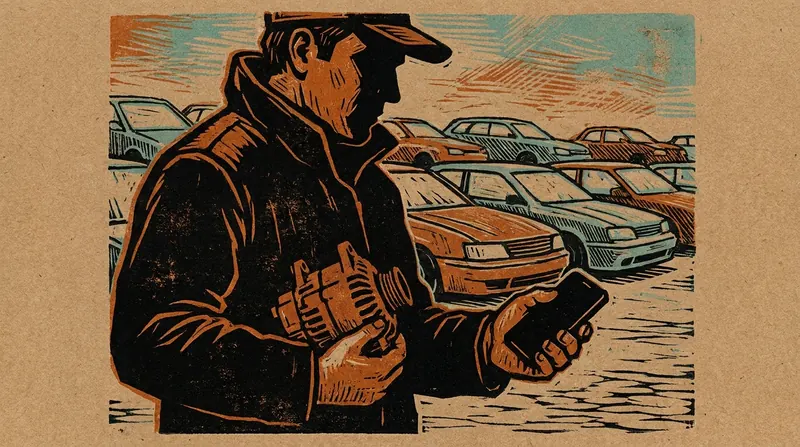
Find a car that matches yours, then check the part before you start. Look for damage, leaks, cracked tabs or missing pieces. If there are several matching cars, compare them and take the best one.
- Take a photo first. A picture of how the part is mounted, which wires go where and which bolts hold it helps when you install it at home.
- Spray rusty bolts and wait. Penetrating oil works better with a few minutes to soak in.
- Keep the hardware. Bolts, clips, brackets and connectors are often worth more to you than the yard charges. Put them in a bag with the part.
- Watch for fluids. Radiators, transmissions, brake lines and fuel parts can still hold fluid. Bring a rag and a small container, and ask staff what to do with fluids; yards have rules about spills.
- Leave the car safe. Don't leave a door or hood propped in a way that could fall on the next person.
If you get stuck, ask. Staff at many yards will point you to a car or tell you what tools you need. They usually won't pull the part for you; that is what a full-service yard does. 206 listed yards in the directory have proof of both, so you can choose.
Paying at the counter
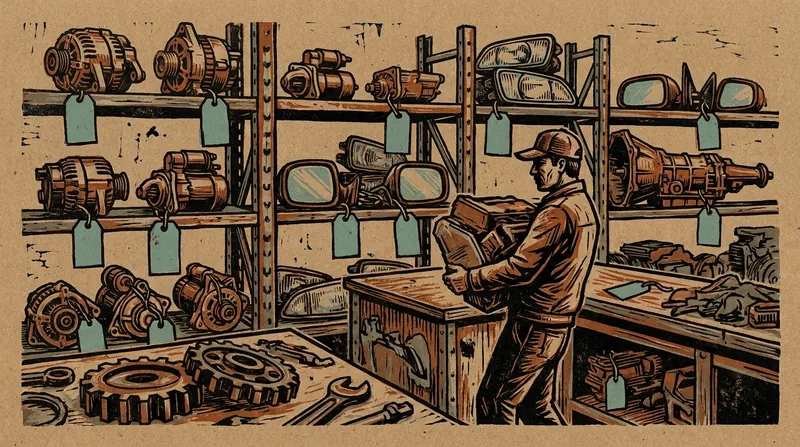
On the way out you bring the parts to the counter. Many pull-your-own yards price parts by type from a posted list: one price for an alternator, another for a door, another for a seat, no matter which car it came off. Others price each part. Either way, ask or look at the list before you pull, so you know what you are paying.
You may be asked to show what is in your toolbox again. Keep receipts for everything; you will need them for a return or a core refund.
A core charge is a deposit added to some parts that can be rebuilt, like alternators, starters, batteries, and sometimes engines or transmissions. You pay it with the part. When you bring your old part back to the yard, you get the deposit back. If you bring the old part with you when you buy, some yards skip the charge. Ask which parts carry one and how many days you have to return the old part.
Returns and exchanges
Return policies vary more than anything else at these yards. Some yards let you exchange a part that doesn't work within a set number of days. Some give store credit instead of cash. Some sell parts as-is, with no returns. Some offer an optional warranty for an extra charge.
Ask before you pay, not after. Find out how long you have, whether you get cash or credit, and whether you need the receipt. Some yards mark parts with paint or a sticker so they know the part came from them. Don't remove the mark.
When to go
Weekends are popular. Of the listed pull-your-own yards, 570 (78%) list Saturday hours on Google and 325 (44%) list Sunday hours. Among those open Saturdays, the typical opening time is 8 AM, and 303 of 570 open by 8 AM.
Go early. You get more daylight, cooler weather in summer, and first pick of the cars that came in that week. Many yards stop letting people in an hour or so before closing, and the last entry time is not always on Google. Call ahead to check.
What customers say
Sentences from 4 and 5 star Google reviews of listed pull-your-own yards:
“If you’re looking for affordable used auto parts and don’t mind pulling the parts yourself, I definitely recommend checking them out.”
“You have to bring your own tools and they can sell you water or Gatorade on site if you didn't bring your own.”
“Customer service was great, and I was able to bring my daughter along while I pulled the part.”
Find a pull-your-own yard
Our pull-your-own-parts yards list shows every yard with proof, by state and for 120 cities with two or more. 193 of the 734 are locations of multi-location yard chains; the rest are independents. See pull-your-own yards by state for the numbers, and what to bring before your first trip.
Quick answers
- How does a self-service junkyard work?
- You pay to enter if the yard charges admission, walk the rows to find a car like yours, take the part off with your own tools, and pay for it at the counter on the way out. Parts are usually priced by type of part, and some carry a refundable core charge.
- Do I need to bring my own tools?
- Yes. At a pull-your-own yard you remove the part yourself, so you bring the tools. Many yards lend or rent wheelbarrows or wagons. Rules on power tools, jacks and torches vary by yard, so ask before you go.
- Can I return a part from a pull-your-own yard?
- It depends on the yard. Some offer an exchange or store credit within a set window, some sell parts as-is, and some sell an optional warranty. Ask at the counter before you pay and keep your receipt.
- What is a core charge?
- A refundable deposit added to some rebuildable parts, such as alternators, starters and batteries. You get it back when you return your old part, usually within a set time. Ask the yard which parts carry one and how long you have.
General information, not legal or safety advice. Yard rules, title and paperwork rules vary by yard and by state, so ask the yard and check with your state's DMV. We don't quote prices or payouts: what a yard charges for parts or pays for a car changes daily.