Full-service vs self-service junkyards
Both sell used parts from wrecked and worn-out cars. The difference is who takes the part off the car, and that changes what you bring, what you pay and how long it takes.
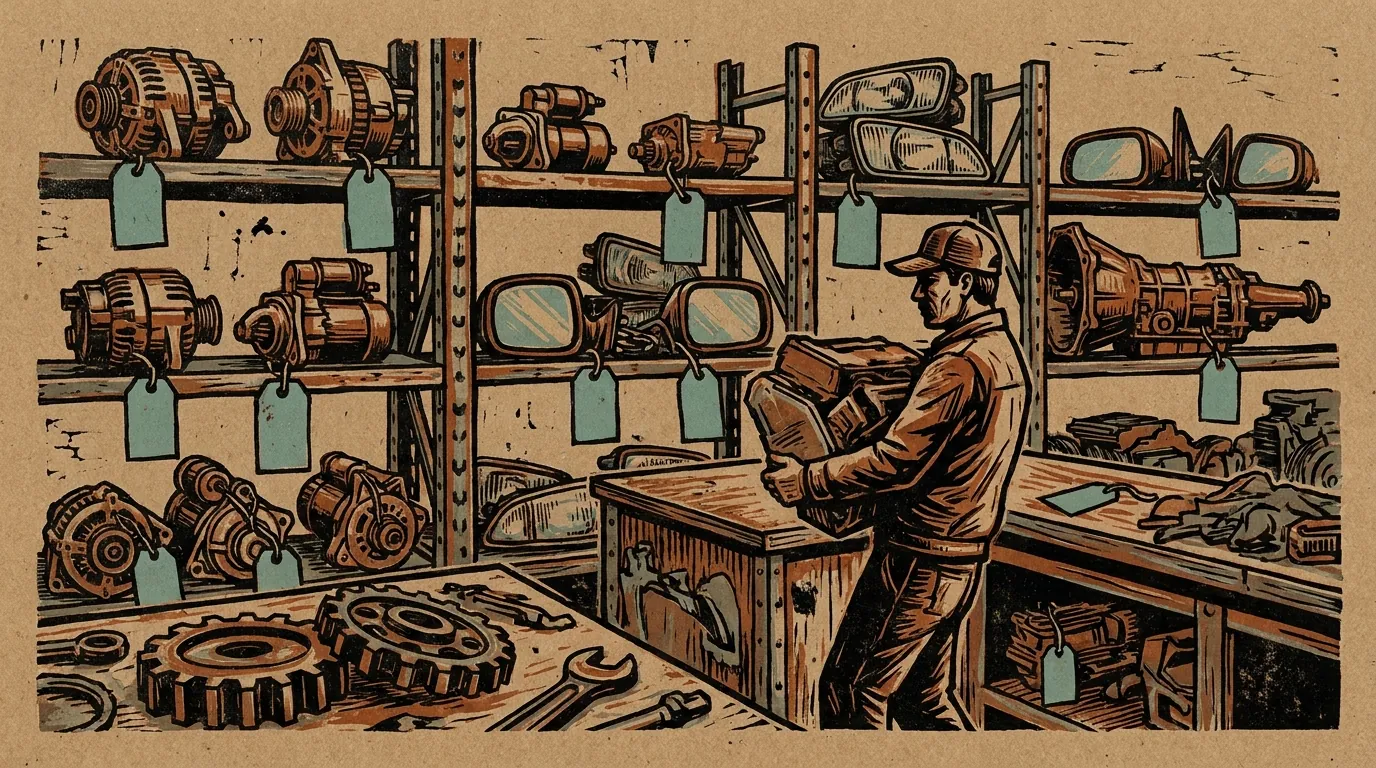
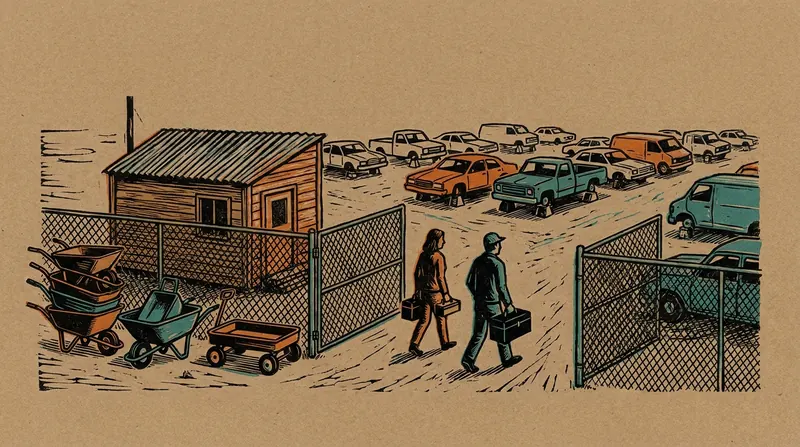
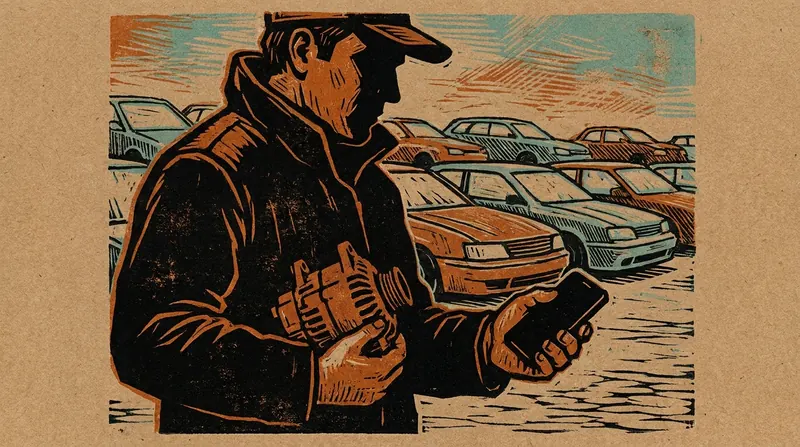
At a self-service yard, also called pull-your-own or u-pull, you walk the rows, find a matching car and remove the part with your own tools. At a full-service yard you ask at the counter, and staff find the part, pull it and hand it to you. Many full-service yards have already pulled their best parts and keep them on shelves, tagged and sometimes tested.
By the numbers
We mark a yard as self-service or full-service only when a customer review or the yard's own website says so. Of the 5,296 junkyards in the directory, 1,578 have proof of at least one.
Yard type · proof shown
- Self-service only
- 528
- Full-service only
- 844
- Both
- 206
- Self-service open Saturdays
- 78%
- Full-service open Saturdays
- 46%
- Median rating, self-service
- 4.2 ★
- Median rating, full-service
- 4.2 ★
Self-service yards are more likely to open on weekends: 78% list Saturday hours and 44% Sunday hours, against 46% and 8% of full-service yards. The median self-service yard has 276 Google reviews and the median full-service yard 123. 193 of the 734 self-service yards are locations of multi-location chains.
How a self-service yard works
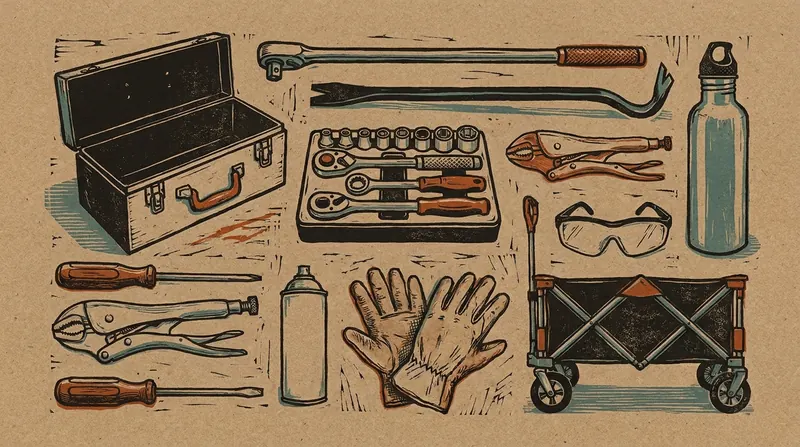
You pay a small entry fee at many yards, sign a waiver at some, and go into the rows with your tools. Cars sit on wheel stands so you can reach underneath. You find the part, take it off, carry it to the counter and pay. Parts are often priced by type from a posted list, whatever car they came from. The step-by-step version is in how pick-your-own-parts yards work.
How a full-service yard works
You call or walk up to the counter with your year, make, model and the part you need. Staff check their inventory, which at many full-service yards is a computer system of pulled parts and whole cars. If they have it, they pull it or take it off the shelf. Many full-service yards clean, test and label parts before they sell them, and some offer a warranty. Some search other yards' inventory for you when they don't have the part, and some ship or deliver.
When self-service makes sense
- You have the tools and some experience. Small and medium jobs like lights, mirrors, trim, seats, wheels, alternators and starters are good first pulls.
- You want to save money. You are paying for the part, not the labor to remove it.
- You want to see the donor car. You can check mileage, damage and how the part looks on the car.
- You want the small stuff too. Bolts, clips, brackets and connectors come with you.
- You have a common car. Popular models show up in the rows often, so your odds are better.
- You like the hunt. Some people go just to look around. A weekend in the rows is a hobby for plenty of mechanics.
When full-service makes sense
- The part is big or hard to reach. Engines, transmissions, rear axles, dashboards and parts buried deep in the car take special tools and hours of work.
- You need it to work. A tested part with a warranty can be worth paying more for, especially on an expensive repair.
- You don't have tools, time or a safe way to do it. Pulling parts means heavy lifting, sharp metal and rusty bolts.
- You have a less common car. A full-service yard can search its system, and sometimes other yards', instead of you walking every row.
- A shop is doing the repair. Many repair shops buy from full-service yards and may prefer a part with a warranty.
206 listed yards have proof of both: customers pull their own parts in the yard, and the counter also sells pulled parts. Ask what is already on the shelf before you go into the rows.
What to ask either kind of yard
- Do you have my car, or a car that shares the part?
- Is there a core charge on this part, and how do I get it back?
- What is the return or exchange policy, and is it cash or store credit?
- Do you offer a warranty, and what does it cover?
- For full-service: has the part been tested, and what was the mileage of the car it came from?
- For self-service: what tools are allowed, and when is the last entry?
Prices differ by yard and change over time, so ask for them directly. We don't publish them.
What customers say
Sentences from 4 and 5 star Google reviews of listed yards, self-service first, then full-service:
“If you’re looking for affordable used auto parts and don’t mind pulling the parts yourself, I definitely recommend checking them out.”
“You have to bring your own tools and they can sell you water or Gatorade on site if you didn't bring your own.”
“Let them know what I needed, told them I was on my way and the they had the part ready to go”
“Very nice on the phone, had the part waiting for me, and had a warranty on it.”
Find a yard
Every state and city page lists its junkyards with the yard type marked when there's proof. For pull-your-own yards only, see pull-your-own-parts yards, with pages for 120 cities. For the numbers by state, see junkyards by the numbers.
Quick answers
- What is the difference between a full-service and a self-service junkyard?
- At a self-service (pull-your-own) yard you bring tools and remove the part yourself. At a full-service yard staff pull the part, often clean and test it, and sell it to you at the counter.
- Is a self-service junkyard cheaper?
- Usually, because you do the labor. A full-service yard charges more for the same part but saves you the time, the tools and the risk of pulling it, and is more likely to offer a warranty. Ask each yard for its prices; they vary by yard and by part.
- Can a full-service junkyard ship parts?
- Some full-service yards ship parts or deliver to repair shops. Ask the yard; it depends on the yard and the part.
General information, not legal or safety advice. Yard rules, title and paperwork rules vary by yard and by state, so ask the yard and check with your state's DMV. We don't quote prices or payouts: what a yard charges for parts or pays for a car changes daily.