What to bring to a junkyard
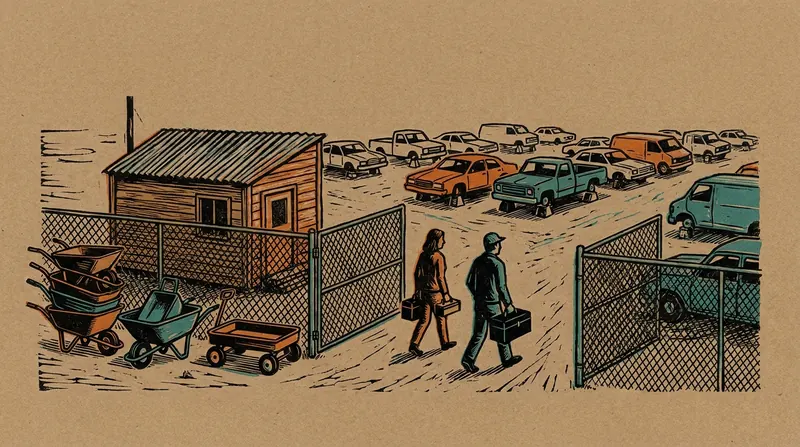
A pull-your-own yard gives you the car. Everything else, from the socket set to the water bottle, you bring. Here is a checklist that covers most jobs.
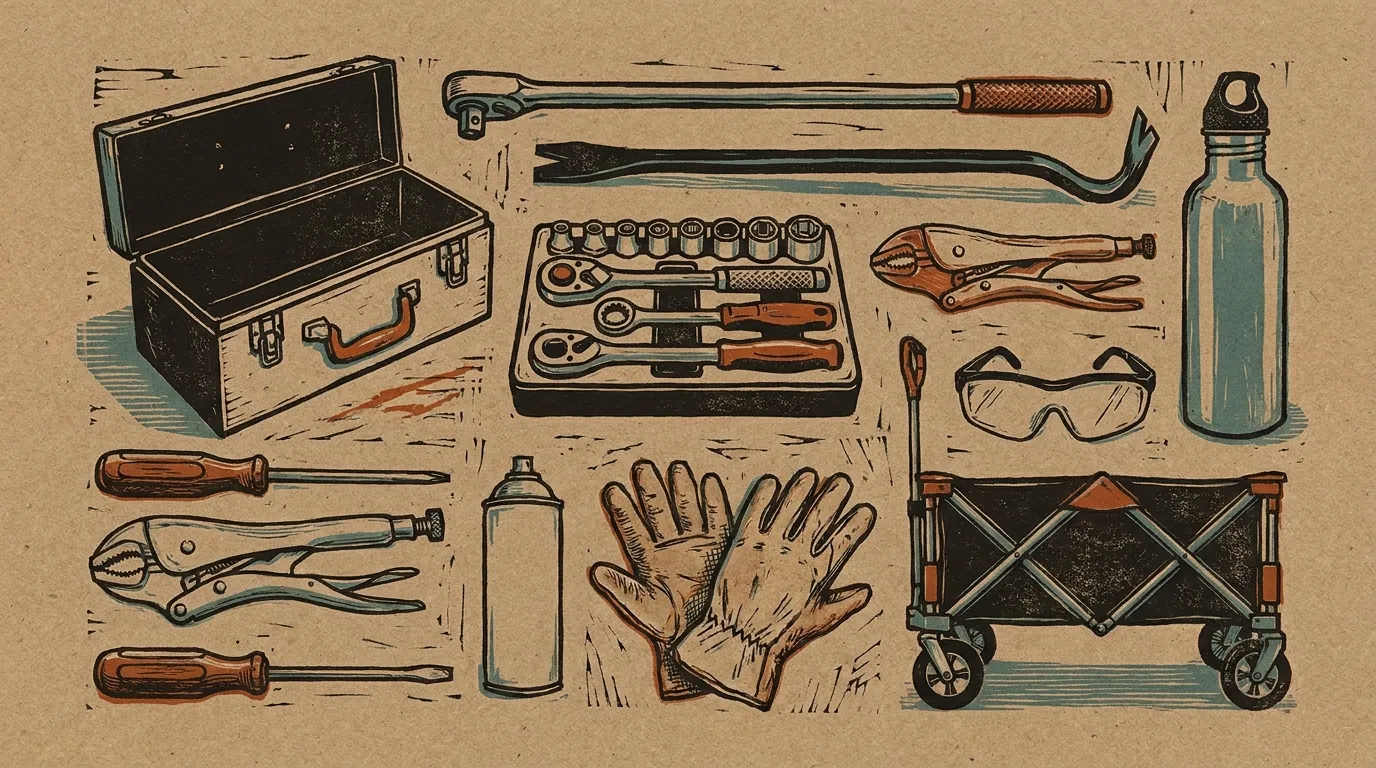
What you need depends on the part. A taillight takes a screwdriver. A starter can take an hour, three extensions and a breaker bar. If you are not sure what the job needs, look up a repair video or a service manual for your car the night before and write down the tools it uses. Then pack a little more than that. The parking lot is a long walk from the far rows, and there is no hardware store inside the fence.
This guide is for pull-your-own yards, where you remove the part yourself. The directory lists 734 yards with review or website proof that customers pull their own parts. At a full-service yard staff pull the part, and you only need a way to carry it home.
The short list
- Socket set (metric and standard), ratchets and extensions
- Breaker bar or a long ratchet
- Combination wrenches
- Screwdrivers: flat, Phillips and a stubby of each
- Pliers, locking pliers and wire cutters
- Pry bar and a hammer
- Torx and hex bits
- Penetrating oil
- Work gloves, safety glasses, closed-toe boots
- Water, a rag and a few zip-top bags
- A wagon or wheelbarrow for heavy parts
Hand tools
A good socket set is the core of the kit. Bring both metric and standard sizes unless you know exactly what your car uses; many cars mix them. Deep sockets help on studs and long bolts. Two or three extensions of different lengths and a universal joint get you around brackets and hoses.
Add a breaker bar for bolts that have been tight for twenty years. Axle nuts, suspension bolts and crank pulleys often need one.
Torx and hex bits are easy to forget and stop a job cold. Many newer cars use Torx screws on trim, seats, mirrors and door handles. Some European cars use external Torx bolts. A set of plastic trim tools pops interior panels without breaking the clips.
Round it out with screwdrivers, pliers, locking pliers, wire cutters, a pry bar and a hammer. Wire cutters let you take a connector with a few inches of wire when the plug won't release. A pry bar helps with stuck brackets and control arms.
Penetrating oil and other helpers
Cars in a salvage yard have been outside a long time, and bolts rust. Spray stubborn bolts with penetrating oil first, move to the next one, and come back after a few minutes. It saves broken bolts and skinned knuckles.
Small things that make the day easier:
- Zip-top bags and a marker to keep bolts and clips with the part they came from.
- A flashlight or headlamp for looking under dashes and into engine bays.
- A magnetic pickup tool for the bolt that falls into the engine bay.
- Rags or shop towels, and hand cleaner for the drive home.
- A piece of cardboard to kneel or lie on beside the car. The ground is often mud, gravel or broken glass.
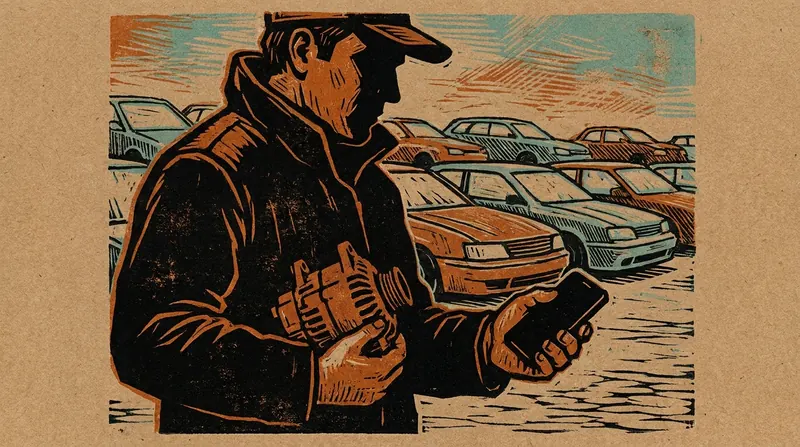
- Your phone, charged, to photograph how things were connected and to look up part numbers.
Battery tools
A cordless impact wrench turns an hour of fighting rusted bolts into minutes. Many pull-your-own yards allow battery-powered tools like impact wrenches, drills and small reciprocating saws. Bring a charged spare battery; there are no outlets in the rows.
Corded tools, generators and anything that makes sparks or flame, like grinders, cutoff wheels and torches, are banned at many yards because of fuel and fluids still in the cars. Check the rules before you pack them.
Safety gear
A salvage yard is full of broken glass, sharp metal, loose parts and uneven ground. Dress for it.
- Closed-toe boots with thick soles. Work boots are best. Many yards turn away anyone in sandals or open shoes.
- Work gloves. Sheet metal edges and broken glass cut. Mechanic's gloves keep some feel for small bolts.
- Safety glasses. Rust, dirt and old fluid fall into your face when you work under a dashboard or a fender.
- Long pants and sleeves you don't mind ruining.
- Sun and weather. Water, sunscreen and a hat in summer. There is little shade between the rows. Layers in winter.
Work from the side of a car, never underneath it. The cars sit on stands so you can reach the underside without crawling in. If a car rocks when you lean on it, move on and tell the staff.
Getting the part out
Heavy parts like transmissions, axles, seats and wheels need a way back to the counter. Many yards lend or rent wheelbarrows, wagons or engine carts at the gate. Ask when you check in. If you bring your own folding wagon, it doubles as a tool cart in the rows.
For engines, transmissions and other heavy parts, ask the yard how they handle them. Some will bring a loader or forklift to lift the part out for you. Some won't. A full-service yard may be the easier choice; see full-service vs self-service junkyards.
Rules vary from yard to yard. Before your first visit, call or check the yard's website for:
- Whether jacks, jack stands, torches, grinders or power tools are allowed
- Whether children can come in, and at what age
- Whether pets are allowed (usually not)
- Whether you can bring your own wagon, or borrow one
- The last time they let people in before closing
Before you leave home
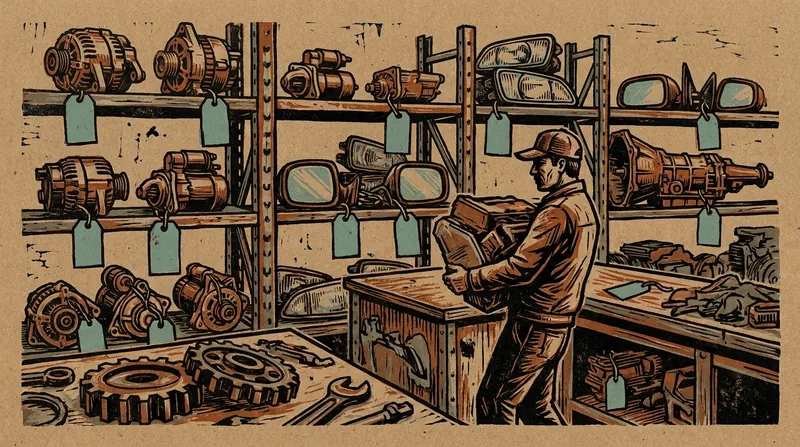
Know exactly which part you need: year, make, model, engine and trim, and a part number if you can read one off your old part. Take a photo of the part on your car. Some yards post their inventory online; 1,772 listed yards in the directory have a review or website that mentions it. Check it, or call, to see if they have cars that match. Our guide to finding used parts explains how to tell which other models share your part.
Go early if you can. Of the 734 listed pull-your-own yards, 570 (78%) open on Saturdays, and the typical Saturday opening time is 8 AM. Mornings are cooler and you get first look at the newest cars.
What customers say
Sentences from 4 and 5 star Google reviews of listed pull-your-own yards:
“Just bring your own tools and a wheelbarrow.”
“The owners are super friendly and helpful, and they even offer wheelbarrows to make it easier to haul your parts.”
“It's a real junk yard and remove your own minor parts is common so bring tools.”
Quick answers
- What tools should I bring to a junkyard?
- A metric and standard socket set with ratchets and extensions, a breaker bar, combination wrenches, screwdrivers, pliers and locking pliers, a pry bar, a hammer, Torx bits, a trim tool and penetrating oil. Add a cordless impact wrench if the yard allows battery tools.
- Can I bring a jack to a junkyard?
- Most pull-your-own yards do not allow jacks or jack stands because the cars already sit on wheel stands. Rules vary by yard, so ask before you go.
- Can I use power tools at a junkyard?
- Many yards allow battery-powered tools such as impact wrenches, drills and reciprocating saws. Torches, grinders and anything with a flame or sparks are commonly banned. Check the rules with the yard first.
- What should I wear to a junkyard?
- Closed-toe boots with thick soles, long pants, work gloves and safety glasses. Bring sunscreen, a hat and water in summer, and layers in winter. Clothes will get dirty.
General information, not legal or safety advice. Yard rules, title and paperwork rules vary by yard and by state, so ask the yard and check with your state's DMV. We don't quote prices or payouts: what a yard charges for parts or pays for a car changes daily.